Short answer: Business automation means letting software handle the repetitive tasks that eat your day, answering calls and website enquiries, following up leads, booking appointments, chasing invoices, requesting reviews, and moving information between your tools, so you can focus on the work only you can do. Small-business adoption has jumped from 22% to 38% in two years, and businesses that automate typically cut manual work and costs by around 30% and see a 250% return within 18 months. You do not need to automate everything; you need to automate the handful of tasks that are stealing the most time.
"Automation" sounds like something for big companies with big budgets and IT departments. In 2026 it is exactly the opposite, it is one of the biggest advantages available to a small business, precisely because it lets a small team punch far above its weight. This guide cuts through the hype and shows you the specific, practical things you can automate right now, and how to pick where to start.
The quiet revolution in small business
Automation has crossed from novelty to necessity, fast. Small and medium business adoption of AI and automation has jumped from around 22% in 2024 to 38% in 2026, nearly doubling in two years. And the businesses doing it are seeing real results: automation typically cuts manual work and operating costs by at least 30% while increasing speed, and businesses report an average return of around 250% within the first 18 months.
This is not about replacing people. It is about removing the repetitive, low-value tasks that stop a small team from doing the work that actually grows the business. Every hour your team spends copying details between systems, chasing an unpaid invoice, or manually following up a lead is an hour not spent serving customers or winning new ones.
Automation is not about doing more things. It is about your business no longer needing you for the boring ones.
The Australian opportunity
For Australian businesses specifically, the timing is a genuine opportunity. Around 43 to 44% of Australian SMEs report some AI adoption, but the majority have not meaningfully built it into how they operate, and only about 7% have woven it into the actual customer experience. Deloitte has estimated AI could add $44 billion a year to the Australian economy.
What that means on the ground: most of your competitors are still doing everything by hand. The business that automates its follow-ups, bookings and admin this year runs leaner, responds faster and looks more professional than the one still relying on sticky notes and good intentions. Early movers get a real edge while the field is slow.
What "automation" actually means for a small business
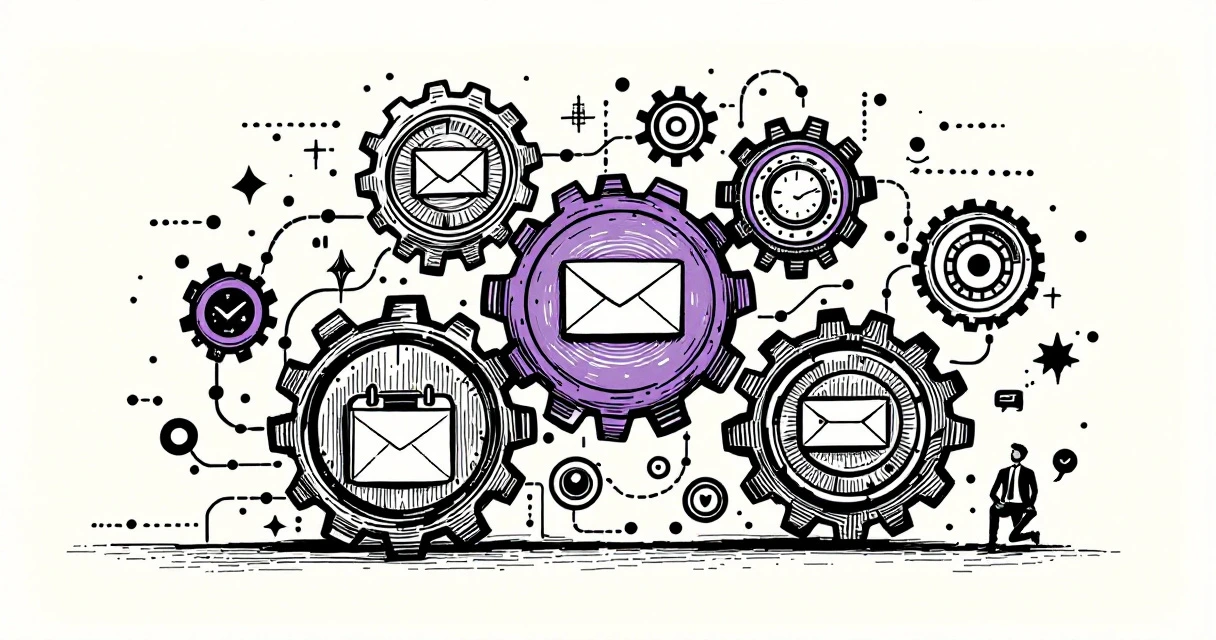
Forget robots and science fiction. For a small business, automation simply means setting up your tools so that routine tasks happen by themselves, triggered by an event, with no one having to remember. A new enquiry automatically gets a reply and a follow-up. A completed job automatically triggers a review request. A booking automatically sends a reminder the day before. An invoice automatically chases itself when it is overdue.
Most of it comes down to two things: connecting the tools you already use so information flows between them without manual re-entry, and setting up sequences that handle repetitive customer interactions on their own. That is it. No coding, no IT department, just your business running the boring parts by itself.
12 high-ROI things you can automate right now
Here are the practical, proven automations that deliver the biggest return for a typical small business:
1. Answering the phone
An AI voice agent answers every call 24/7, handles common questions, captures the lead and books the job, so you stop losing customers to missed calls while you are busy or closed.
2. Handling website enquiries
An AI website chatbot greets visitors, answers their questions, qualifies them and captures their details around the clock, converting far more of your traffic than a contact form ever will.
3. Following up every lead
Automated email and SMS sequences follow up new enquiries instantly and keep gently in touch until they are ready to buy, so no lead ever goes cold because someone forgot to chase it.
4. Booking appointments and sending reminders
Online booking lets customers pick a time themselves, and automated reminders the day before slash no-shows. No more phone tag to arrange a time.
5. Requesting reviews
An automated request sent the moment a job is finished turns happy customers into Google reviews, which now directly drive how easily new customers find you.
6. Chasing invoices and payments
Automated invoicing and polite payment reminders get you paid faster without the awkward manual follow-up, and without invoices slipping through the cracks.
7. Following up quotes and proposals
A quote sent and never followed up is money left on the table. An automated nudge a few days later recovers a surprising number of jobs that would otherwise go quiet.
8. Moving information between your tools
Instead of typing the same customer details into three different systems, automation syncs them, so a new lead flows from your website into your CRM into your email list without anyone re-keying a thing.
9. Keeping your customer records in one place
A CRM automatically captures every enquiry, call, message and job against the right customer, so you always know who someone is and what has happened, without a shoebox of notes.
10. Onboarding new customers
An automated welcome sequence sends new customers everything they need, what happens next, what to expect, how to reach you, making you look organised and professional from the first moment.
11. Sending regular updates and offers
Automated newsletters and offer campaigns keep you in front of past customers so they come back, without you having to remember to send anything.
12. Alerting you to what needs attention
Automation can watch for the things that matter, an urgent enquiry, an overdue task, a hot lead, and ping you immediately, so the important things never slip while the routine runs itself.
How to choose what to automate first
You should not try to do all twelve at once. The smart approach is to automate the task that is costing you the most, using three simple filters:
- How often does it happen? A task you do fifty times a week is a far better automation target than one you do once a month.
- How much time or money does it leak? Missed calls and un-chased leads leak revenue directly; manual data entry leaks hours. Start where the leak is biggest.
- How much do you dread it? The tasks everyone puts off, chasing payments, following up quotes, are exactly the ones that quietly cost you, because they get done late or not at all. Automating them removes both the cost and the dread.
Pick the one task that scores highest across those three, automate it, and let it prove itself before adding the next. Momentum beats trying to boil the ocean.
The CRM: the hub that ties it together
Most of these automations work best when they share a common hub, and for a small business that hub is a CRM, a system that holds all your customers and their history in one place. With a CRM at the centre, a lead captured by your chatbot flows into it, triggers an automated follow-up, becomes a booking, gets an invoice, and receives a review request, all against the one customer record, all automatically. Without a hub, you have a drawer full of disconnected tools; with one, you have a joined-up machine. Setting up the CRM properly is often the highest-leverage first move, because everything else plugs into it.
How automations stack and compound
The real power shows up when the automations connect. Each one is useful on its own, but chained together they form a system where a customer is looked after end to end without anyone touching it. Follow a single lead through:
- A customer rings after hours. Your AI voice agent answers, captures their details and books them in.
- The booking flows into your CRM and triggers an automated confirmation and a reminder the day before.
- You do the job. Finishing it triggers an automated review request while the customer is happiest, and the review helps new customers find you.
- An invoice goes out automatically and chases itself if it is late, so you get paid without an awkward phone call.
- Weeks later, an automated follow-up checks in and offers a related service, turning a one-off job into a repeat customer.
Not one of those steps needed you to remember anything. That is the compounding effect: each automation removes a task, and together they remove an entire category of work, the admin and follow-through that used to depend on you having the time and memory to do it. The business starts running like a much larger, more organised operation, without a larger team.
A sensible order to roll it out
You do not flip everything on at once. A calm, staged rollout works best:
- Weeks 1 to 2: stop the biggest leak. Usually that is missed enquiries, so start with answering calls and website chat, and capturing every lead into one place.
- Weeks 3 to 4: never drop a lead. Add automated follow-up for enquiries and quotes, plus booking and reminders, so interested customers are always chased and no-shows fall.
- Month 2: get paid and get reviewed. Turn on automated invoicing with reminders and automated review requests, improving cash flow and visibility at the same time.
- Month 3 and beyond: nurture and refine. Layer in onboarding, newsletters and re-engagement, and tidy up how your tools talk to each other, so the whole system runs smoothly.
At each stage you let the new automation settle and prove its value before adding the next. Within a few months the routine parts of your business are running themselves, and you built it without a single overwhelming week.
Common myths that hold small businesses back
- "I'm too small to need automation." The smaller your team, the more every hour matters, and the bigger the relative gain from freeing those hours. Automation levels the field against larger competitors.
- "It's too expensive." Most small-business automations cost a modest monthly fee and pay for themselves many times over in recovered leads, faster payment and saved hours, hence the typical 250% return.
- "It's too technical for me." You do not build it yourself. Set up properly by someone who knows how, it just runs, and you get on with your business.
- "It will make my business feel impersonal." Done well, the opposite is true. Instant replies, reliable follow-up and professional onboarding make customers feel better looked after, not worse, and free your team to be more personal where it counts.
What this looks like for a real Melbourne business
Picture a small landscaping business in Melbourne's outer suburbs, run by an owner and two crew. Enquiries come in by phone and through the website. The owner is on site most days, so calls ring out, website enquiries get answered whenever he next checks his phone, quotes go out and sometimes never get followed up, and invoices get chased when he remembers. Plenty of work slips through the cracks, and he spends his evenings on admin.
He automates the worst leaks one at a time. First, an AI voice agent so every call is answered and every lead captured. Then automated follow-up so every enquiry and quote gets chased without him thinking about it. Then online booking with reminders, automated invoicing with payment reminders, and an automated review request after each job. It all feeds into a simple CRM so every customer and job lives in one place.
Nothing about the landscaping changed, but the business runs completely differently. No call is missed, no quote goes cold, invoices get paid faster, reviews roll in and help new customers find him, and his evenings are his own again. He did not hire anyone or work harder; he just stopped doing by hand the things that software does better. That is what automation looks like for a real small business.
Frequently asked questions
What is business automation, in plain terms?
Business automation means setting up your software so routine tasks happen by themselves, replying to enquiries, following up leads, booking appointments, sending reminders, chasing invoices, requesting reviews and moving information between your tools, without anyone having to remember or re-key anything. For a small business it is mostly about connecting the tools you already use and setting up sequences that handle repetitive customer interactions automatically.
Is automation worth it for a small business?
Yes, arguably more than for large ones. Businesses that automate typically cut manual work and costs by around 30% and see roughly a 250% return within 18 months. Because a small team has less time to spare, freeing hours and never dropping a lead has an outsized impact. Adoption among small businesses has nearly doubled in two years for exactly this reason.
What should I automate first?
Start with the single task costing you the most, judged by how often it happens, how much time or revenue it leaks, and how much you dread it. For most businesses that is answering enquiries (missed calls and un-chased website leads) or following up leads and quotes. Automate one thing, let it prove itself, then add the next.
Do I need to be technical to automate my business?
No. The setup is handled for you; once it is running, it simply works in the background. You do not need to code or manage anything, you just stop doing the repetitive tasks by hand. The goal is less work for you, not a new system to learn.
Will automation make my business feel less personal?
Done well, it makes you feel more professional and responsive, instant replies, reliable follow-up, smooth onboarding, while freeing your team to spend their time on the personal, high-value moments that actually need a human. It removes the impersonal drudgery, not the human touch.
How much does it cost to automate a small business?
Most individual automations run on a modest monthly fee, and they typically pay for themselves many times over through recovered leads, faster payment and saved hours, which is why the average return sits around 250% within 18 months. You also do not have to do everything at once; you can start with one high-value automation and add more as each one proves its worth, so the cost scales with the results.
Do these automations work together, or is each one separate?
They work best together. When your call answering, chatbot, follow-ups, bookings, invoicing and reviews all feed into one CRM, a customer is looked after from first enquiry to repeat business without anyone touching it. Each automation is useful alone, but connected they form a system that runs the routine side of your business end to end, which is where the biggest gains come from.
Related reading
- The real cost of missed calls (and how AI answers them)
- How AI chatbots capture the leads you lose after hours
- Email automation: the highest-return channel most businesses ignore
- Digital loyalty cards for cafes and local shops
- What an AI receptionist actually costs in Australia
Let your business run the boring parts by itself
Every repetitive task you still do by hand, answering, following up, booking, chasing, entering, is time and money you could get back, and a lead you could stop losing. In 2026 the businesses that win are simply the ones that let software handle the routine so their people can handle the customers. At WebLift, we set up practical automations and CRM systems for Australian businesses, so your enquiries, follow-ups, bookings and admin look after themselves. Get in touch for a free chat about what you could automate, or see our plans to get started.