
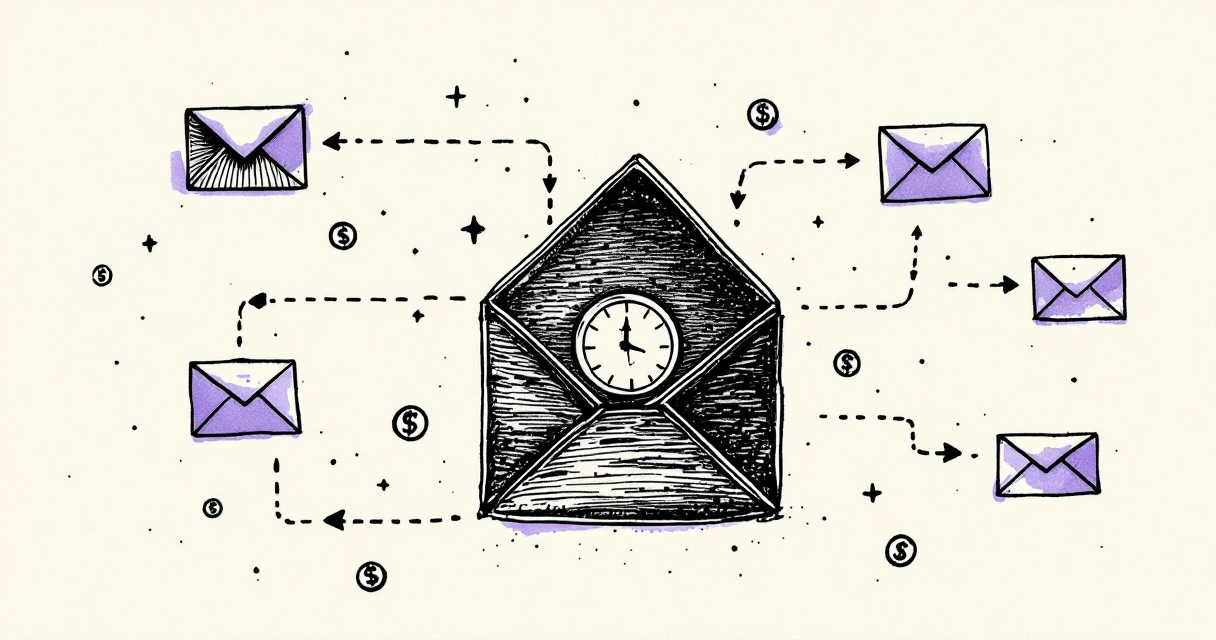
Short answer: Email marketing remains the highest-return channel in 2026, delivering an average of $36 to $42 for every $1 spent for small businesses. The real magic is automation, automated emails generate around 320% more revenue than one-off blasts and drive four times the click-through, because they reach the right person at the right moment without you lifting a finger. A handful of simple automated sequences, a welcome series, an abandoned-cart reminder, a follow-up, quietly earn money in the background every single day.
Ask most small business owners where they should spend their marketing time and they will say social media or ads. Almost none say email, and that is exactly why email is such an opportunity: it is the most profitable channel there is, and most businesses are barely using it. This guide explains why email automation delivers such extraordinary returns, and the specific sequences every small business should have running.
The most profitable channel is the one you are ignoring
The numbers on email are not close. For small and medium businesses, email marketing delivers an average return of $36 to $42 for every $1 spent in 2026. For retail and consumer goods that climbs to around $45, and for some online merchants as high as $72 per dollar. No paid ad channel comes close to that consistency.
And yet email sits quietly in the background while owners pour time into social posts that a fraction of their audience ever sees. Around 64% of small businesses now use some email automation, but far fewer use it well. That gap, between the businesses treating email as an afterthought and the few running it properly, is where a large amount of easy revenue is hiding.
Email is the highest-return marketing channel there is, and most small businesses are barely switching it on.
Why email beats social media and ads
Three structural advantages make email uniquely profitable:
- You own the list. Your email list is an asset you control. Social media followers belong to the platform, and its algorithm decides how many of them ever see your post, usually a small slice. When you email your list, you reach the whole list.
- It reaches people who already know you. Everyone on your list has already raised their hand, bought from you, enquired, or subscribed. You are talking to warm contacts, not cold strangers, which is why the conversion is so much higher.
- It is direct and personal. An email lands in a personal inbox, one-to-one, not lost in a scrolling feed. Done well, it feels like a message rather than a billboard.
Ads and social have their place for getting found and filling the top of the funnel. But for turning interest into sales and customers into repeat customers, nothing matches email, and nothing matches it for cost.
The real unlock: automation, not blasts
Here is the distinction that changes everything. Most businesses that "do email" send the occasional newsletter or promo blast to their whole list. That works, a bit. But the real money is in automation: sequences that trigger automatically based on what a person does, and then run themselves.
The difference is stark. Automated emails generate around 320% more revenue than non-automated ones, and triggered emails drive four times the click-through rate of bulk sends. Why? Because an automated email arrives at the perfect moment, right after someone signs up, right after they abandon a cart, right when they are going quiet, with a message matched to that moment. Relevance and timing are everything, and automation nails both, at scale, forever, without you touching it.
This is why 31% of marketers say email automation delivers the highest return of any channel they use, and why 76% of businesses see a positive return within a year of setting it up. You build it once; it earns indefinitely.
The core automations every small business should have
You do not need dozens of complex flows. A small set of well-built sequences covers the highest-value moments in a customer relationship. Here are the ones that matter most:
1. The welcome sequence
When someone joins your list or makes their first enquiry or purchase, a short series of emails introduces your business, sets expectations, and makes a first offer. First impressions are powerful, and welcome emails are opened and clicked far more than any later message. This is the single most valuable sequence to start with.
2. The abandoned-cart (or abandoned-enquiry) reminder
For any business where people start something and do not finish, an online order, a booking, a quote request, a gentle automated reminder recovers a remarkable share of them. Abandoned-cart emails have the highest click engagement of any email type, around a 23% click-through rate, because they reach someone who was moments from buying. If you sell online and run only one automation, make it this one.
3. The post-purchase follow-up
After someone buys or a job is done, an automated follow-up thanks them, tells them what to expect, and, at the right moment, asks for a review or offers a related product or service. This is where one-off customers quietly turn into repeat ones, and where you generate the reviews that now power your local search visibility.
4. The nurture drip for leads who are not ready yet
Most enquiries do not buy immediately. Instead of chasing them manually or letting them go cold, a nurture sequence stays gently in touch over days or weeks, sharing helpful information and building trust, so that when they are ready, you are the obvious choice. Around half of small businesses using automation run drip campaigns for exactly this reason.
5. The re-engagement or win-back sequence
Customers go quiet. An automated win-back sequence, triggered when someone has not engaged or bought in a while, brings a meaningful portion of them back with a reminder, an offer, or simply a "we miss you". Reactivating an existing customer is far cheaper than winning a new one.
6. The review and referral request
A perfectly-timed automated request, sent when a customer is happiest, turns satisfied customers into public reviews and word-of-mouth referrals. Given how important reviews now are to being found in local and AI search, this sequence pays off twice.
Why timing and relevance beat volume
It is tempting to think more emails means more sales. In reality, one well-timed automated email beats ten random blasts, because it reaches the right person at the moment they care. A welcome email lands while your business is fresh in mind. A cart reminder lands while the customer still wants the thing. A win-back lands just as someone is drifting away. Automation is simply the machinery that makes sure the right message reaches the right person at the right time, every time, without anyone remembering to send it.
This is also why automation lifts your results without adding to your workload. You are not writing more emails; you are writing a handful once and letting them run. Businesses that adopt automation commonly see up to a 25% increase in marketing ROI off the back of that shift alone.
"Isn't email dead? Won't I annoy people?"
Email is the opposite of dead, it quietly out-earns every trendier channel, year after year. The "email is annoying" worry comes from businesses doing it badly: too frequent, irrelevant, obviously mass-blasted. Automation done well is the antidote, because every message is relevant to where that specific person is in their journey. A helpful welcome, a useful reminder, a genuine thank-you, these are messages people are glad to receive.
The golden rules are simple: only email people who chose to hear from you, make every message genuinely useful or relevant, and always make it easy to unsubscribe. Follow those and email is a welcome guest in the inbox, not an intruder.
How to get started without it becoming a project
You do not need to build everything at once. The sensible path:
- Start collecting emails properly. Add a simple sign-up on your website, capture emails at the point of purchase or enquiry, and make sure every new customer goes onto your list, with their permission.
- Turn on one or two automations first. A welcome sequence and, if you sell online, an abandoned-cart reminder. These two alone often cover the cost of the whole effort many times over.
- Add sequences as you go. Once the first ones are earning, layer in a post-purchase follow-up, a nurture drip, and a win-back series.
- Keep the messages genuinely useful. Write like a helpful human, not a billboard, and let relevance do the selling.
Common mistakes to avoid
- Only ever sending blasts. One-off promos to the whole list leave the biggest money, the automated sequences, on the table.
- Not collecting emails in the first place. No list, no channel. Capturing emails should be built into your website and every customer interaction.
- Buying lists or emailing people who never opted in. This kills deliverability and trust. Only email people who chose to hear from you.
- Setting and forgetting with no attention. Automations run themselves, but a quick periodic check on what is working keeps them earning their best.
Segmentation: sending the right message to the right people
The next step up from automation is segmentation, grouping your list so different people get different messages. You do not need anything elaborate to benefit. Even simple splits make a real difference:
- New subscribers versus existing customers. Someone who just joined needs an introduction; a repeat customer needs a reason to come back. The same email to both wastes the moment.
- Buyers versus browsers. People who have purchased respond to different offers than people who have only enquired. Speaking to each appropriately lifts response sharply.
- By interest or service. If you offer several services or product ranges, grouping people by what they actually care about means every email feels relevant rather than scattergun.
- By engagement. Your most engaged subscribers can hear from you more often; the quieter ones are better served by a gentler win-back approach than by more of the same.
Segmentation is why a well-run email programme feels personal even at scale. Combined with automation, it means each person receives messages matched both to the moment they are in and to who they are, which is exactly the relevance that drives email's outsized returns.
Does my list need to be big?
No, and this is one of the most encouraging things about email. Because you are talking to warm contacts who already know you, even a small list converts far better than cold traffic, and the return is on the revenue per email, not the size of the list. A few hundred engaged subscribers, emailed well with the right automated sequences, routinely out-earns a large but neglected list that only ever gets the occasional blast. The lesson: do not wait until your list is "big enough". Start with the contacts you have, treat them well, and grow from there. The automations you build for a small list scale effortlessly as it grows.
What this looks like for a real Melbourne business
Picture a boutique homewares shop in Melbourne that sells both in-store and online. They send an email newsletter "when they get a chance", maybe once a month, to their whole list. Sales from email are okay but unpredictable, and plenty of online shoppers add items to their cart and never check out.
They set up three automations. A welcome series greets every new subscriber with the story of the shop and a first-order discount. An abandoned-cart reminder gently nudges anyone who leaves items behind, and starts recovering a steady stream of otherwise-lost sales. A post-purchase follow-up thanks buyers, invites a review, and suggests a matching product a few weeks later.
None of this added to their workload after the initial setup, the sequences run on their own. But within a couple of months, email quietly becomes one of their most reliable revenue sources, the cart reminders alone recovering sales that used to simply vanish, and the review requests feeding the Google reviews that help new customers find them. The monthly newsletter still goes out, but now it sits on top of a machine that earns every day.
Frequently asked questions
What is the ROI of email marketing in 2026?
Email marketing delivers an average of $36 to $42 for every $1 spent for small and medium businesses, rising to around $45 for retail and as high as $72 per dollar for some online merchants. It remains the highest-return marketing channel, and automated emails specifically generate around 320% more revenue than one-off sends.
What is the difference between an email blast and email automation?
A blast is a single message you send to your whole list at once. Automation is a sequence that triggers automatically based on what someone does, such as joining your list, abandoning a cart, or going quiet, and then runs itself. Automation earns far more because each message reaches the right person at the right moment; automated emails drive about four times the click-through of bulk sends.
Which email automations should a small business set up first?
Start with a welcome sequence for new subscribers and customers, and, if you sell online, an abandoned-cart reminder, which has the highest click-through of any email type. These two commonly pay for the whole effort. From there, add a post-purchase follow-up, a nurture drip for leads, and a win-back sequence for lapsed customers.
Is email marketing still worth it with social media and AI around?
Yes, more than ever. You own your email list outright, whereas social platforms decide how many followers see your posts. Email reaches warm contacts directly in their inbox and consistently out-earns every other channel on return. It complements social and search rather than competing with them.
Will I annoy people or end up in spam?
Not if you do it properly. Only email people who opted in, make every message genuinely relevant, and always allow easy unsubscribing. Automation actually reduces annoyance because each message is matched to where that person is in their journey, so it reads as helpful rather than as a mass blast.
How much of this can be automated versus done manually?
Almost all of the high-value work is automated. Once your sequences are built, welcome, cart recovery, follow-up, nurture and win-back, they run entirely on their own, triggered by what each customer does. You still send the occasional broadcast, a seasonal promotion or genuine news, by hand, but the revenue-generating backbone runs without ongoing effort. That is precisely what makes email such a high-leverage channel for a busy small business.
How long until email automation pays off?
Often quickly. Because these sequences target people at their most likely-to-buy moments, a welcome series or cart reminder frequently starts recovering revenue within the first weeks of going live. Across the board, about 76% of businesses see a positive return within a year of adopting automation, and many far sooner, since the sequences keep earning indefinitely once built.
Related reading
- 12 high-ROI things you can automate right now
- How to show up in Google AI Overviews and near-me searches
- How AI chatbots capture the leads you lose after hours
- Digital loyalty cards for cafes and local shops
Turn your email list into a machine that earns
Email is the highest-return marketing channel there is, and automation is what turns it from an occasional newsletter into revenue that arrives every day, without you lifting a finger. At WebLift, we set up email marketing and automation for Australian businesses, welcome series, cart recovery, follow-ups and nurture flows, that quietly earn in the background. Get in touch for a free chat about your email setup, or see our plans to get started.